
Khan Academy at Sapang Bato
A learning partnership putting free world-class coursework, devices, and a working internet connection into the high school where Apl grew up.
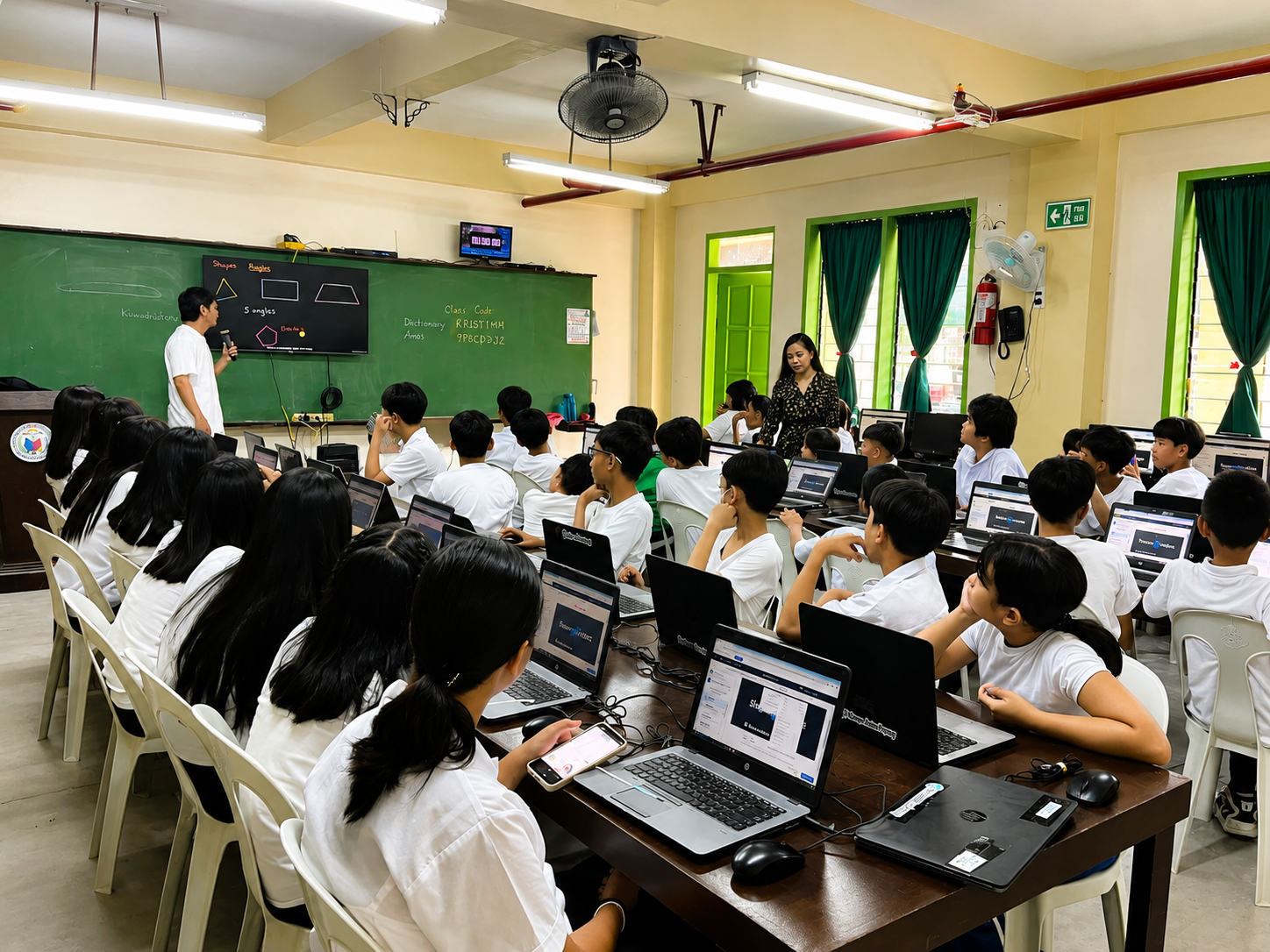
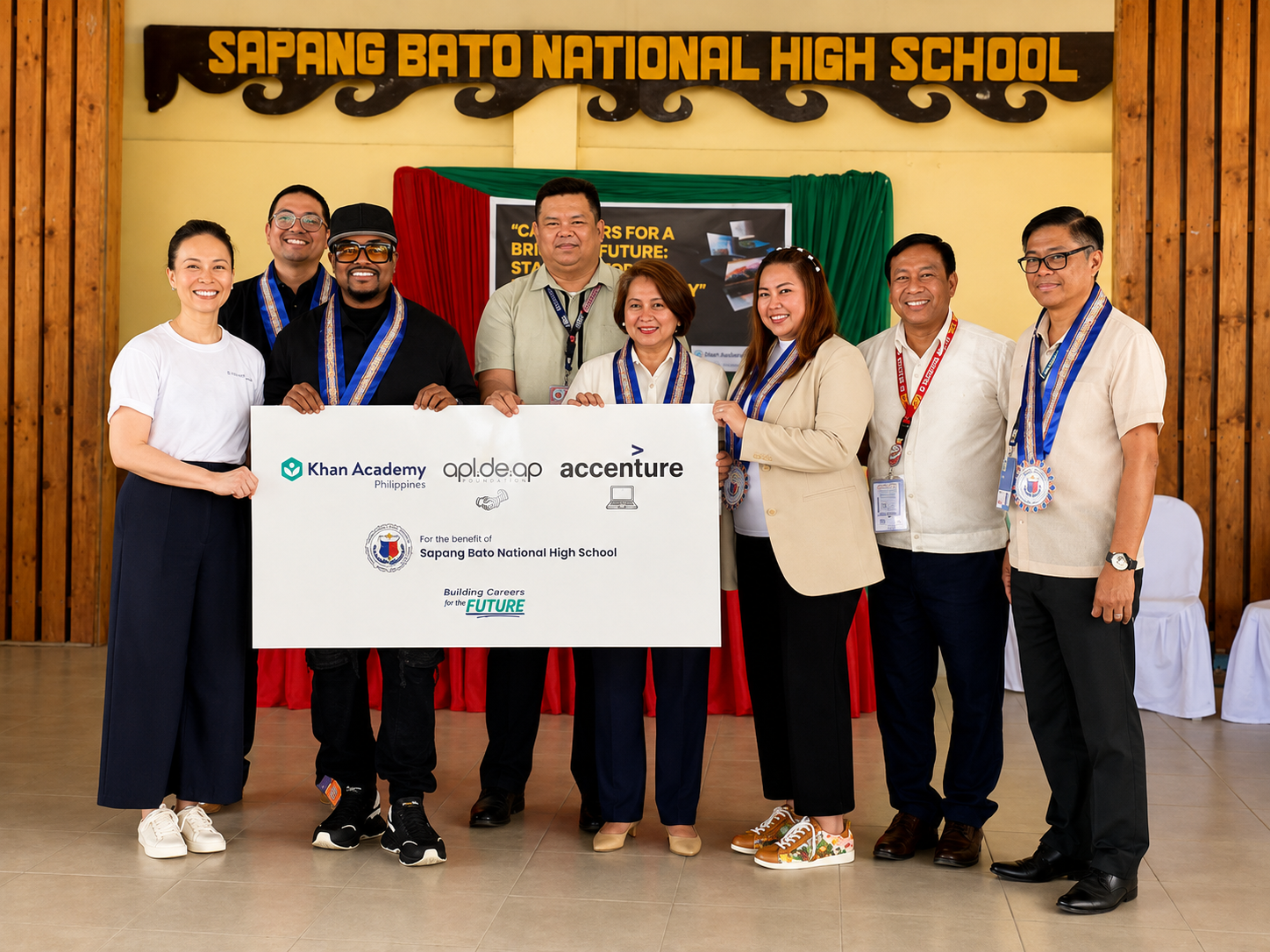
Sapang Bato National High School sits in the barangay where Apl.de.Ap grew up. His mother and relatives still live there. It is also the school that could not accommodate a boy who could not read the blackboard - not out of unkindness, but because it had no way to.
APLFI has supported the school for years. In March 2024, that support became structural, through a partnership where each partner carries one piece. Khan Academy Philippines provides the platform: free coursework in mathematics, science, English, and computer programming, with certificates for demonstrated skill. Accenture Philippines donated fifty laptops and brought its coding and digital skilling programs. APLFI provides the internet connection - and continues to fund it.
That third piece decides whether the other two matter. Laptops are given once. Khan Academy is free forever. But a rural school's internet bill arrives every month, and it is the least fundable thing in education philanthropy. There is no ribbon-cutting for a connectivity payment. It is also the single point of failure: without it, the laptops are typewriters. APLFI carries that cost deliberately, because the least visible expense is usually the one that decides whether anything survives past the launch photos.
The school serves 1,664 students on a thirty-room campus. Sapang Bato is not an endpoint - Khan Academy Philippines is working toward one million Filipino learners across sixteen regions, and this launch coincided with the U.S. Department of Commerce trade mission to the Philippines, placing a rural Pampanga high school inside a national conversation about preparing Filipinos for technology jobs.
Supporting this work means keeping the connection on. It means a student in Sapang Bato learning the same computer science as a student in Manila or California, from the same platform, at no cost to their family. Rural communities cannot participate in a digital economy they cannot reach. This is the on-ramp.